
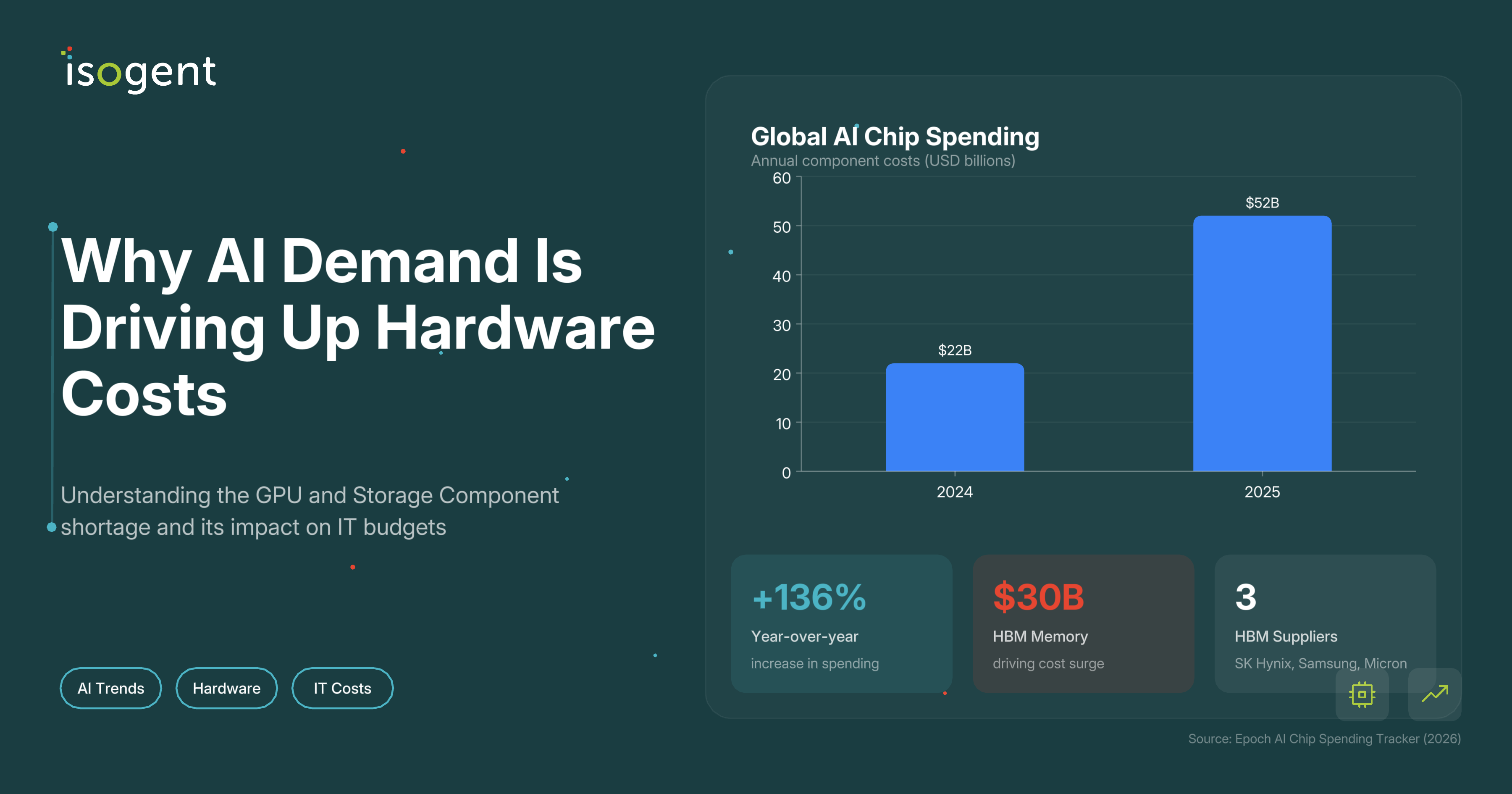
Why AI Demand Is Driving Up Hardware Costs
Artificial intelligence has rapidly become one of the largest drivers of technology investment across the industry. From AI-powered business tools to large-scale machine learning platforms, organizations are investing heavily in the infrastructure required to support these systems. While much of the public conversation focuses on the software side of AI, the growing demand for hardware is creating significant ripple effects throughout the broader technology market.
For businesses, this means rising costs are no longer limited to advanced AI systems alone. Servers, GPUs, storage infrastructure, networking equipment, and business-grade workstations are all being affected by this increase in global demand. As AI adoption accelerates, organizations of all sizes are beginning to feel it through higher pricing, longer procurement timelines, and increased pressure on IT budgeting.
Why AI Is Increasing Hardware Demand
Artificial intelligence workloads require significantly more computing power than traditional business applications. Training and operating AI models depend heavily on high-performance hardware, particularly GPUs and specialized processing systems capable of handling massive amounts of data simultaneously.
As a result, large technology companies, cloud providers, and AI vendors are purchasing hardware on an unprecedented scale.
Several factors are contributing to rising hardware demand:
GPU Shortages and Competition
High-performance GPUs have become essential for AI development and cloud-based AI services. Demand from major technology companies has placed intense pressure on global supply chains, making these components more difficult and expensive to obtain.
Expansion of AI Data Centers
Organizations are rapidly building and expanding AI-focused data centers to support machine learning workloads. This increases demand not only for processors, but also for storage systems, cooling infrastructure, networking equipment, and power management hardware.
Increased Demand Across Multiple Industries
AI adoption is no longer limited to large technology firms. Healthcare, finance, manufacturing, logistics, and professional services industries are all increasing investment in AI-related infrastructure and services.
As demand rises across multiple sectors simultaneously, pricing pressure spreads throughout the broader hardware market.
The Impact on Businesses
Even organizations not actively investing in AI infrastructure may still experience some indirect effects, such as:
Higher Hardware Costs
Business laptops, servers, networking equipment, and device components may become more expensive due to increased manufacturing demand and supply constraints tied to AI infrastructure growth.
Longer Procurement Timelines
Hardware availability can fluctuate as manufacturers prioritize large-scale enterprise and AI-related orders. Businesses may experience delays when replacing aging infrastructure or expanding their environments.
Increased Lifecycle Pressure
As replacement costs rise, some organizations may attempt to extend hardware lifecycles longer than originally planned. While understandable, aging infrastructure can create reliability, compatibility, and security concerns over time.
Budgeting Challenges
Technology planning becomes more difficult when pricing volatility affects refresh cycles, infrastructure projects, and operational forecasting.
In many cases, organizations are discovering that infrastructure planning now requires greater long-term visibility than it did just a few years ago.
So, What Are Organizations Doing?
Rather than reacting to price increases after they occur, many organizations are adapting their infrastructure planning strategies.
Planning Hardware Lifecycles Earlier
Businesses are forecasting refresh timelines further in advance to reduce exposure to sudden pricing spikes or supply shortages.
Standardizing Infrastructure
Reducing unnecessary hardware variation helps simplify procurement, support, and long-term maintenance.
Prioritizing Critical Upgrades
Organizations are focusing infrastructure investments on systems that directly impact security, operational continuity, or productivity.
Evaluating Cloud vs On-Premise Balance
Some businesses are reassessing whether certain workloads are better suited for cloud platforms rather than expanding physical infrastructure internally.
These strategies help organizations maintain operational stability while adapting to changing market conditions.
How Managed IT Providers Help
Managed IT providers play an important role in helping businesses navigate rising hardware costs and infrastructure planning challenges.
This support may include:
- Long-term hardware lifecycle planning
- Procurement guidance and vendor coordination
- Infrastructure standardization
- Capacity and performance assessments
- Budget forecasting assistance
By improving visibility into infrastructure needs and refresh timelines, managed providers help organizations make more intentional purchasing decisions rather than reacting under pressure.
The goal is not simply to reduce costs, but to maintain reliable and sustainable technology environments as hardware markets continue evolving.
__________________________________________________________
Sources:
https://my.idc.com/getdoc.jsp?containerId=IDC_P33198
https://www.wsws.org/en/articles/2026/05/25/iclk-m25.html
